Eating
Educating yourself on the basic building blocks of food and its health
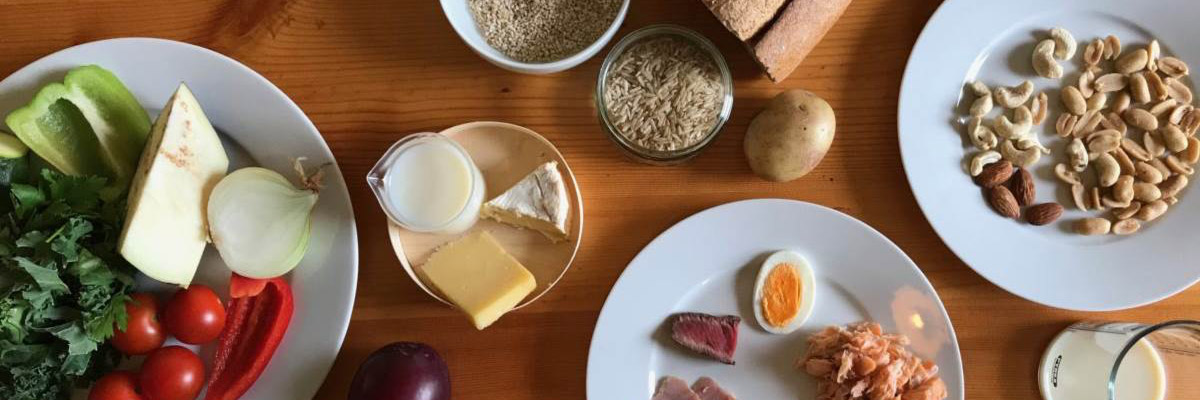
First things first:
Clear your mind and remove any (and all) thoughts of diets, dieting, 'twelve week challenges', calorie restrictions, and quick fixes.
Ok, ready to begin?
There is not doubt that along with your intermittent fasting, certain dieting methods work for some, that may not work for others. This is why I set out to find the asic key principles on what the body needs to keep running at optimal health.
I learned rather quickly that my body responds differently to others on certain food groups, and thus breaking down what that food group consists of nutritionally vs what my body needed was the task.
My findings, well, turned out to be rather simple:
1) Keep it very low in carbohydrates
If you don’t know well the carbohydrate content of foods, your first task is to make a study of it and avoid foods high in carbohydrates — bread, pasta, potatoes, sugars of any kind. Carbohydrates are metabolized like sugars — like the simple sugars like those found in a fizzy soft drink. Your body is using sugars and carbohydrates as its "go-to" source of fuel, rather than burning the fat you are wearing around. If you deprive your body of its go-to-fuel — sugar —
it will have no choice but to burn fat.
You push your body into fat-burning mode (ketosis) when you do not give it any sugar to burn. Ideally you will stay in this fat-burning mode for weeks and months as you drop kilograms. I have been in ketosis for months, to my best knowledge. I do not eat anything that might bump me out of it. If I did fall off the wagon and eat too many carbs, I’d get right back on the wagon but the shift back to ketosis can take a few days and I don’t want to give up those days of fat burning to eat a piece of bread. With all of the kilograms I have had to lose, it just is not worth it.
If you are just getting started and eat a lot of high-carb foods, you probably want to start your diet approach by first simply reducing your intake of carbohydrates. That is a big and painful job in itself. You really need to get to the point where you are never even considering drinking a soda, eating a slice of bread, or grabbing a French fry. (OK, so we might “consider” eating those things by the minute, but you need to get to the point where you are actually eating something else.) You need to be so low carb that you are avoiding the carrots on your plate and even, shudder, using fewer onions in your cooking. Eat mountains and mountains of greens, okra, cabbage, and broccoli instead
2) WHEN TO EAT FRUIT
School session is in, haha, lets get educated quickly...
Extracts from Thomas Delauer:
Lately, I’ve had a lot of people asking me explain how carbohydrates work, specifically, how fruit works within the body. You see, fruits got this bad rep. We all seem to think that fruit is horrible because it’s a sugar, and it’s a carb, and we’re living in the low carb generation and yada, yada. The thing is, fruits are important. Come on. They’ve got a lot of vitamins, they’ve got a lot of things that we need, and let’s not forget the simple fact that they’re low calorie.
When it all comes comes down to it, I know some people will disagree, but it is somewhat of a calories in versus calories out game. You can’t deny the fact that someone that is eating significantly less calories and someone who is not is going to probably lose more weight. Now, whether or not they’re losing the right weight, that’s a different question. At the end of the day, fruit is not bad.
I want to tell you when you can eat your fruit to get the most effect from it and to make sure that that fructose, the sugar that is found in fruit, doesn’t get converted into fat. Before I tell you the best time to eat your fruit, I want to explain how carbohydrates are stored and how they’re somewhat metabolized within the body.
You see, carbs are important source of energy for us. They’re important for brain function, they’re important for muscle function. When you consume carbohydrates, they’re stored in the body in one of two forms. They’re either stored as muscle glycogen or liver glycogen. What that means is it’s a stored form of carbohydrate. Your body will either shuttle those carbohydrates into storage within the muscle or into storage within the liver.
The difference is that glucose or the simple monosaccharides that come from regular starches and things like that, those are shuttled in as muscle glycogen and only muscle glycogen. Then you’ve got fructose. Fructose is shuttled in to the liver as liver glycogen. Glucose will not replenish liver glycogen or liver carbohydrates stores and fructose will not replenish muscle glycogen or muscle carbohydrates stores. It’s that simple. There’s no crisscrossing.
As long as we can keep that in mind, we can have the perfect tools necessary to make sure we can still have our cake and eat it too or should I say, have our fruit and eat it too. We have to remember when were looking at it like this is that the liver can only hold a small amount of carbohydrates at a time.
The liver can usually only hold roughly two to three glasses of orange juice worth of fructose or worth of carbohydrates. Where as the muscles, obviously, you’ve got a lot more of them throughout your body can hold significantly more. You can get away with eating more starches or more regular sugars or other kinds of glucose than you can fructose.
You see, what happens is when you consume too much fructose, the liver glycogen gets full and it triggers an insomatic process that tells the body to start storing the extra fructose as body fat. More often than not, it goes right to the midsection where we don’t really want it. This is terrible if you’re trying to get in the best possible shape.
All we have to do is monitor how much fructose we take in. It’s really that simple, but we do also have to be aware of the fact that fructose also needs to be utilized relatively quickly. You see, before it’s converted into liver glycogen, it’s also flown through the blood stream being readily available for energy.
What does this tell us?
Well now I’m going to tell you the best time to eat your fruit
and the best time not to eat your fruit. Ultimately, you should be eating your fructose right before your workout. Unfortunately, fructose kind of takes a backseat because everyone wants to fill up their muscle glycogen storage before they go to the gym. They want to get that pumped. They want the energy in the muscles.Well, let me tell you, if you crave some fruit, having it before your workout is probably going to be the best time. Why? Because the body is going to want to use that fructose first because it’s readily available for energy. Before it’s processed down the liver and stored it’s glycogen, it’s flown to the blood stream and readily available. The perfect time that you can use it when you’re in the gym, or starting your morning exercise.
Also, you’re going to burn through that liver glycogen really quick. You might as well eat your fruit, let yourself have some fun and enjoy the fruit right before you go to the gym. One thing that a lot of people don’t really know about is the fact that if your liver glycogen levels are low, we don’t have a lot of those glycogens storage in your liver, your body has to produce alanine from the muscles. What that means is that your body starts breaking down the muscle tissue, which means that you can catabolize. You can loss that lean muscle tissue.
We have to remember that lean muscle tissue, even if we’re not trying to get bulky is ultimately what is going to help keep our metabolism sky rocketed so that we can burn more fat and have more energy throughout the day. They’re you have it. Eating your fruit pre-workout is going to be not only help you spare some muscle and let you have your fruit, but it’s also going to give you the energy that you need.
Let’s talk about when not to eat your fruit. You’re not going to eat you fruit right after your workout. You see because after you’ve burnt through that liver glycogen, your body starts pulling storage from the muscles. While the first place that your body is going to restore glycogen after a workout specifically is within the muscles. You want to restore the muscle glycogen first.
Additionally, first thing in the morning is another OK time to have fruit because while you’re sleeping, your body is pulling glycogen storage from the liver, not from the muscles. It’s doing this because you’re not moving around. Unless you’re having a horrendous nightmare where you’re kicking and screaming and really using a lot of muscle, chances are, you’re pulling glycogen storage from your liver and not from your muscles.
First thing in the morning, you can replenish that liver glycogen with just a little bit of carbohydrates in the way of fruit. There you have it. To summarize, you want to have your fruit right before you workout or possibly a little bit during, but you don’t want to have it post-workout. Post-workout, you want to have your starches, you want to have your regular carbs, and you’re OK to have a small amount of fruit first thing in the morning.
Now that you know when to eat your fruit and when not to eat your fruit, I’ve got one little tip to leave you with. Try to go organic whenever possible. Look, I know I sound like a broken record when I talk about that, the thing is, is that organic has less fructose. You can eat more of the fruit that you love and get a little bit less sugar out of it.
You see, a lot of times, the GMO foods and all the other fruits that are in the supermarkets, they have been bred to be a little bit sweeter so that they taste better so that we buy more of them. Eat organic whenever possible.
Hope this clears up some of the myths about fruits that you can still enjoy natures can eat and get the most out of your diet. As always, keep it locked in here for more tips on how to get in the best possible shape of your life while maintaining your focus and your career. I’ll see you in the next video.